Is Pink Duck Safe to Eat? What Every Home Cook Should Know

I still remember the first time I cooked duck breast in my own kitchen. I’d watched chefs glide through the process on cooking shows, flipping glossy duck breasts like it was no big deal. So I followed along—scored the skin, rendered the fat, and gave it a confident sear.
Then came the moment of truth.
I sliced into the breast… and froze.
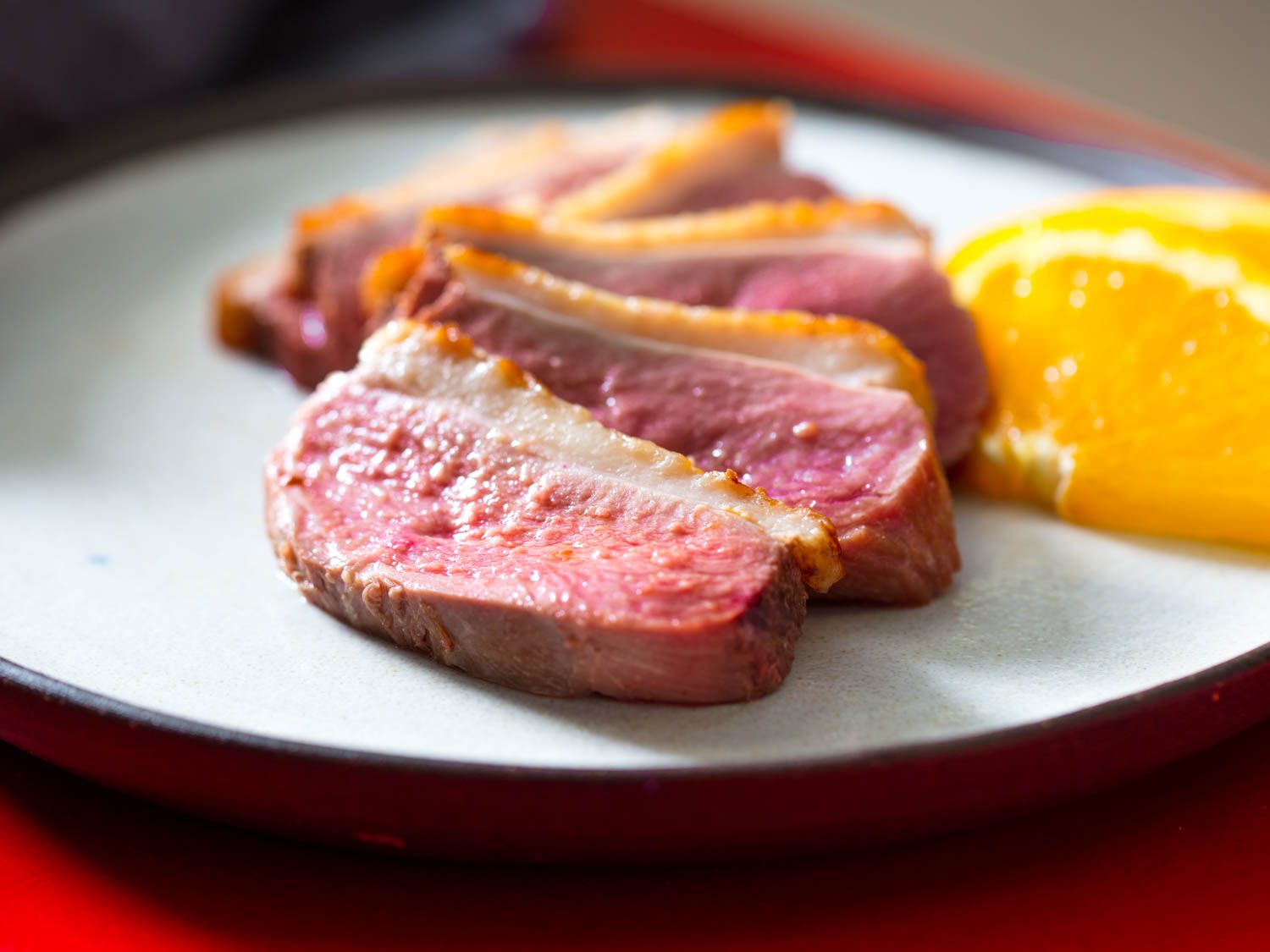
The center glowed a rosy pink. My brain, trained by years of cooking chicken, sounded every alarm bell it had. Pink poultry? Abort mission! My instinct told me to toss it back into the pan until it resembled shoe leather.
But then I stopped. I’d eaten duck at restaurants plenty of times, and it always arrived medium-rare. No one fainted. No one called an ambulance. So instead of panicking, I grabbed my fork—and later, I dove deep into the world of duck cooking.
What I discovered completely changed the way I cook duck at home. If you’ve ever wondered whether pink duck is safe to eat, let me walk you through what I’ve learned.
Duck Ain’t Chicken (So Stop Treating It Like One)
Most of us grew up with one iron rule: poultry must be cooked until there’s zero pink left. Chicken and turkey drilled that lesson into our heads.
But duck plays by different rules.
Even though duck technically belongs to the poultry family, its meat behaves much more like red meat. The texture, fat content, and cooking style resemble beef or lamb far more than chicken breast.
That means duck breast thrives when cooked medium or medium-rare.
Cook it too long and you’ll squeeze every last drop of joy out of it. Overcooked duck becomes dry, chewy, and about as exciting as yesterday’s toast.
When cooked properly, though, duck delivers:
- Tender meat
- Rich flavor
- Crispy skin
- A juicy pink center
Think of it as the steak of the sky.
Why Pink Duck Is Usually Safe
Let’s talk about the elephant in the kitchen: food safety.
Official guidelines often state that poultry should reach 165°F (74°C) internally. That rule exists mainly because poultry like chicken frequently carry bacteria such as salmonella.
Duck is a little different.
With whole duck breast, bacteria usually stay on the surface of the meat, not deep inside. When you sear the outside thoroughly, you eliminate most of that risk.
In many professional kitchens, chefs cook duck breast to about 130–140°F, which produces that signature pink center.
The real villain in most food poisoning cases isn’t the doneness of the meat. It’s cross-contamination.
For example:
- Using the same cutting board for raw duck and salad
- Not washing knives between tasks
- Letting raw juices touch ready-to-eat foods
If you avoid those mistakes and cook the duck properly, the pink center itself isn’t a danger signal.
Duck vs Chicken: The Key Differences
To understand why duck cooks differently, it helps to see the contrast between duck and chicken.
| Feature | Duck | Chicken |
| Meat type | Red meat-like | White meat |
| Safe medium-rare | Yes (whole breast) | No |
| Typical cooking temp | 130–140°F | 165°F minimum |
| Fat content | High | Lower |
| Overcooked texture | Tough and dry | Stringy and dry |
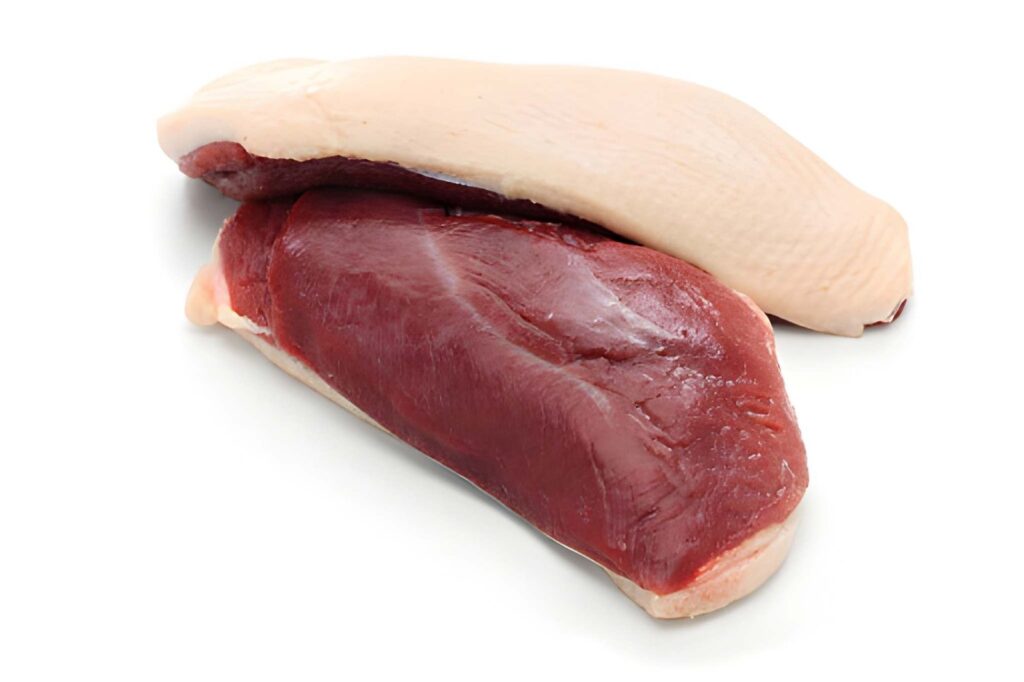
Duck carries more fat and more myoglobin, which gives the meat its darker color and richer flavor. That’s why it behaves closer to steak than poultry.
My Foolproof Tips for Cooking Duck
Cooking duck might feel intimidating the first time, but once you learn a few simple tricks, it becomes surprisingly easy.
Here are the habits that transformed my duck game.
1. Always Use a Meat Thermometer
Guessing doneness is like throwing darts blindfolded.
Stick a thermometer into the thickest part of the breast and watch the temperature carefully.
| Doneness | Temperature |
| Medium-rare | 130–135°F |
| Medium | 140–145°F |
| Well done | 150°F+ |
I usually pull the duck off the heat around 130–135°F, then let it rest.
2. Score the Skin Like a Pro
Duck skin holds a thick layer of fat. If you leave it untouched, that fat just sits there.
Take a sharp knife and score shallow lines across the skin in a crosshatch pattern.
Important rule:
- Cut through the skin only, not the meat.
This helps the fat render and gives you that crackling crispy crust.
3. Start With a Cold Pan
This trick surprised me the first time I learned it.
Instead of dropping duck into a hot pan, place the breast skin-side down in a cold pan, then turn the heat to medium.
Why it works:
- The fat renders slowly
- The skin crisps evenly
- You avoid burning the surface
It’s like letting the duck ease into the sauna instead of jumping into lava.
4. Let It Rest Before Slicing
Patience makes the difference between juicy duck and a puddle of lost flavor.
After cooking, rest the meat 5–10 minutes.
This allows the juices to redistribute throughout the meat rather than flooding your cutting board.
Trust me—this step is gold.
Different Duck Cuts, Different Rules
Not every part of the duck cooks the same way. Some cuts love high heat and pink centers, while others crave long, slow cooking.
Here’s a simple guide.
| Duck Cut | Recommended Temp | Best Cooking Style |
| Duck breast | 130–140°F | Pan-seared |
| Duck leg/thigh | 165°F+ | Braised or confit |
| Ground duck | 165°F | Fully cooked |
Duck Breast
This is the star of the show. Cook it like steak and aim for medium-rare. Duck is red meat. Yep, just like beef or lamb. That means you can safely eat it medium or even medium-rare, as long as it’s cooked properly.
Duck Legs
Legs contain lots of connective tissue. They shine when cooked low and slow until tender.
Classic techniques include:
- Duck confit
- Braising
- Slow roasting
Ground Duck
Grinding mixes bacteria throughout the meat, so ground duck must be fully cooked—just like ground beef or turkey.
Read on: How to Air Dry Ducks at Home (Without Making a Mess in Your Kitchen!)

Serving Pink Duck to Skeptical Guests
Let’s be honest.
If you place a pink duck breast in front of someone who grew up fearing undercooked poultry, you might get a raised eyebrow.
I’ve been there.
Here’s how I win people over.
Slice It Before Serving
Slicing reveals the beautiful gradient:
- Crispy skin
- Seared crust
- Warm pink center
Suddenly it looks intentional rather than suspicious.
Explain the Steak Analogy
I often say something like:
“Duck breast cooks like steak, not chicken.”
That usually clicks immediately.
Add a Bold Sauce
Sauce works like a diplomatic ambassador—it bridges unfamiliar territory.
Some of my favorites:
- Cherry reduction
- Orange glaze
- Balsamic sauce
- Red wine reduction
Before long, skeptics stop worrying and start asking for seconds.
My Favorite Pairings With Duck
Duck brings richness to the plate, so it shines when paired with foods that balance that intensity.
I like to think of it as a dance between fat, acid, and texture.
Sauces That Shine
- Cherry sauce
- Orange gastrique
- Balsamic glaze
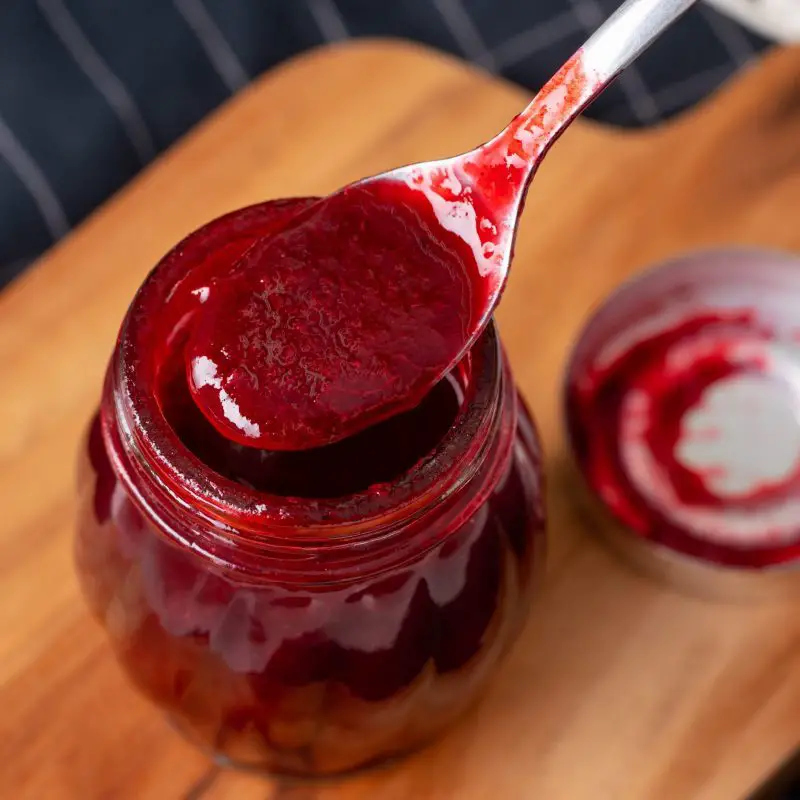
- Blackberry reduction
Sweet and acidic flavors cut through duck’s richness like a sharp knife through butter.
Perfect Side Dishes
Here are some combinations that never fail me.
Crispy sides
- Roasted potatoes
- Polenta fries
- Duck fat potatoes
Fresh greens
- Arugula salad
- Sautéed spinach
- Kale with lemon
Grains
- Wild rice
- Barley
- Farro
Wine Pairings
Duck also plays nicely with wine.
| Wine | Why It Works |
| Pinot Noir | Bright acidity balances the fat |
| Zinfandel | Bold fruit complements rich meat |
| Syrah | Peppery depth matches duck’s flavor |
| Rosé | Fresh and surprisingly versatile |
A good Pinot Noir with duck feels like two old friends shaking hands.
Common Duck Cooking Mistakes
Even experienced cooks sometimes stumble when preparing duck.
Here are a few pitfalls worth avoiding.
Cooking It Like Chicken
This mistake tops the list. Cooking duck breast to 165°F turns it dry and tough.
Not Rendering the Fat
Duck skin needs time to release its fat. Rushing this step leads to soggy skin.
Skipping the Resting Period
Slice too soon and your cutting board becomes a swimming pool of lost flavor.
Overcrowding the Pan
Duck needs space. Too many pieces in the pan lower the temperature and ruin the sear.
Check out: Is Duck Healthier Than Beef? Unpacking the Nutritional Differences
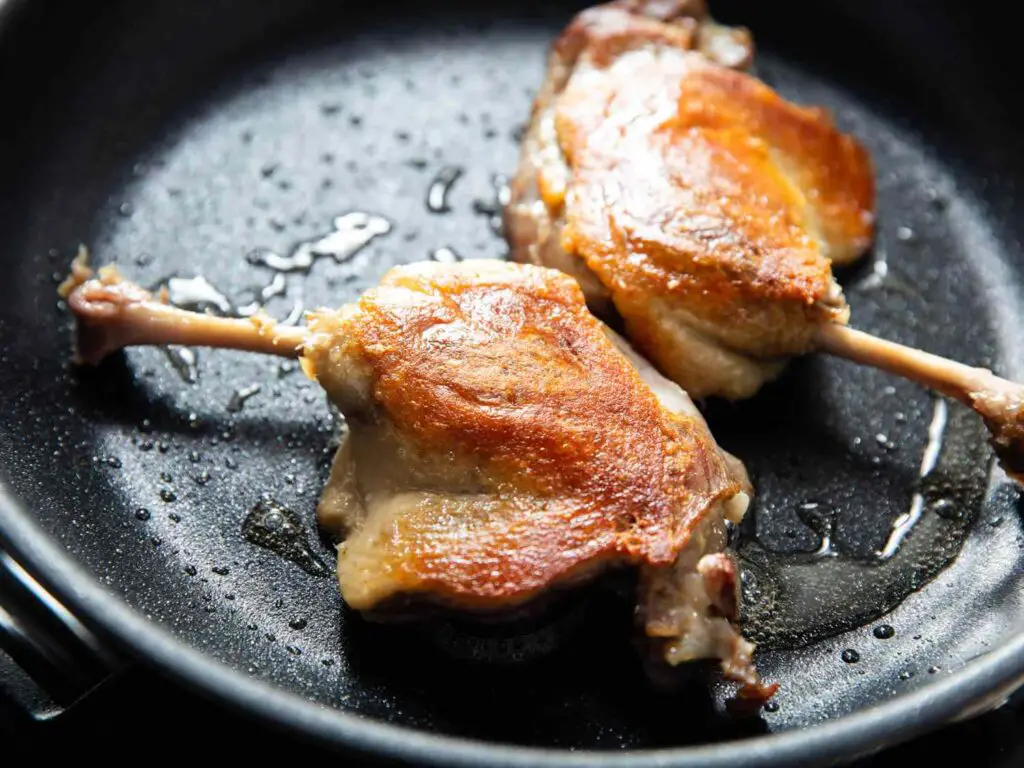
So… Should You Eat Pink Duck?
In short—yes.
When you cook duck breast properly, a pink center isn’t a warning sign. It’s the sweet spot.
As long as you:
- Use a thermometer
- Avoid cross-contamination
- Source quality meat
- Cook with care
…pink duck becomes a perfectly safe and incredibly delicious dish.
Final Bite
The first time I saw pink duck at home, I nearly sent it back to the pan in panic. Now I chase that rosy center like a badge of honor.
Cooking duck used to intimidate me. Today it feels like second nature. Once you understand the rules, duck transforms from a fancy restaurant mystery into a weeknight superstar.
So next time you slice into a duck breast and see that blushing pink center, don’t panic.
Smile.You didn’t undercook it—you nailed it.